Among heat-sealing equipment, this is a critical purchasing decision. Floor-standing foot-operated sealing machines and manual pulse sealing machines perform the same function—both can heat-seal packaging bags—but they are designed for fundamentally different production conditions. Choosing the wrong model can result in either a waste of funds (selecting equipment with excessive specifications) or insufficient production capacity (equipment specifications that fail to meet production demands).
Key Difference: How the operator uses their hands
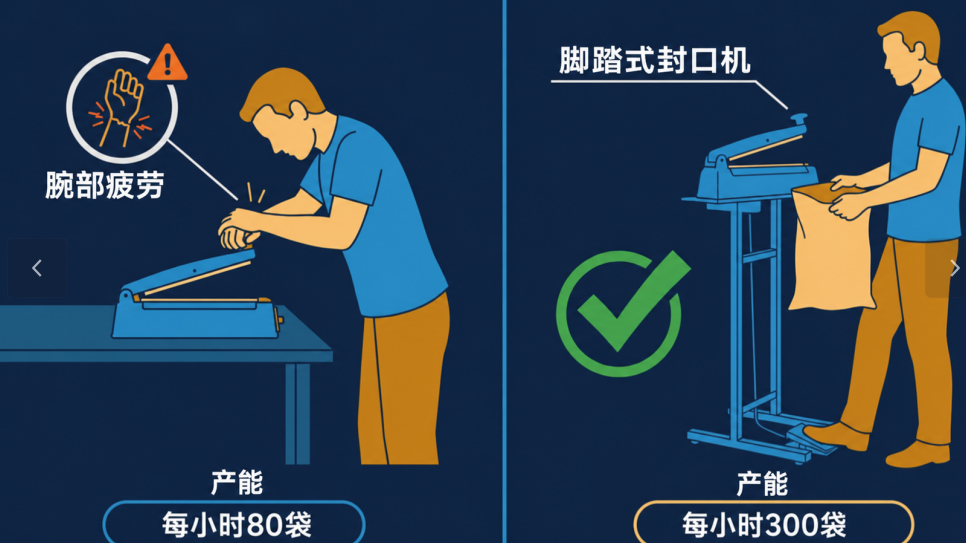
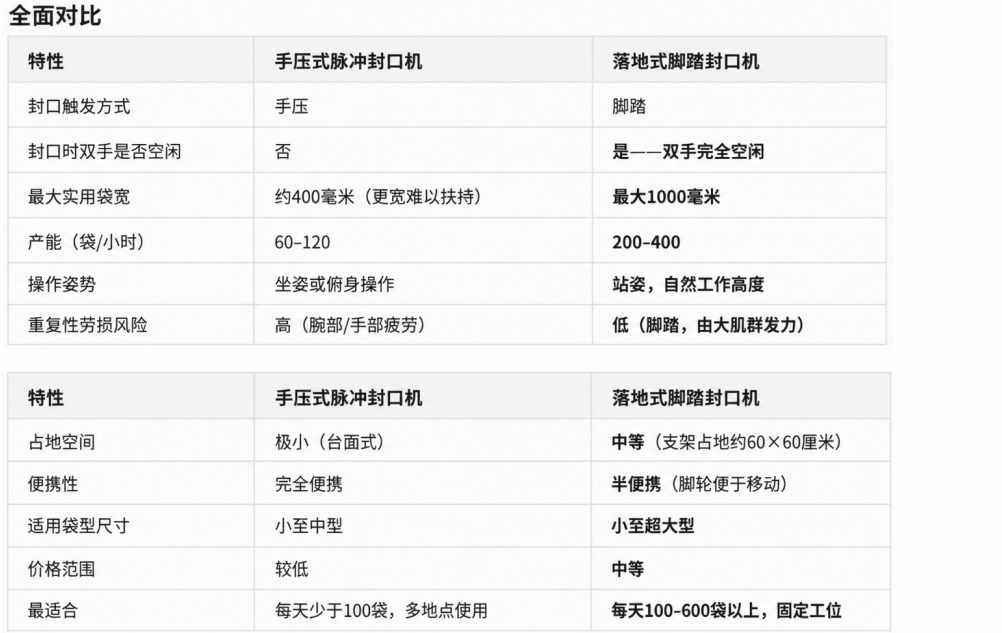
When using a manual pulse sealer, the operator must continuously press down on the sealing bar with one or both hands until the entire pressure-holding cycle is complete. This results in the following limitations:
Operators must set the product down before sealing it;
When handling wide, floppy, or heavy bags, you need to hold the bag steady with one hand while pressing down on the sealing machine with the other;
After sealing is complete, pick up the product again; each package requires three sets of actions.
With a floor-standing foot-operated sealer, the operator's hands remain free throughout the entire operation cycle:
Use one hand to open the bag, and the other to smooth out the film and position it over the sealing strip;
The sealing process is initiated by pressing the foot pedal, making the entire operation smooth and seamless.
For large bags, bulky items, or products that require both hands to secure, this is no longer just a matter of convenience—it’s an essential feature.
Situations Where a Foot-Operated Sealing Machine Is the Only Viable Solution
- Large / Wide Packaging Bags (Width > 400 mm): It is not possible to position the bag and manually press the seal at the same time; the foot-operated model frees up both hands, making it easier to handle the packaging bags.
- The bag contains a heavy item: You must support the weight of the product with one hand while using the other hand to adjust the film at the bag opening, and then activate the sealing mechanism with the foot pedal.
- Powders, grains, or nearly liquid materials: When placing the bag, use both hands to hold the opening open to prevent the material from spilling.
- High-capacity vertical baling station: Manual pressing for more than 4 consecutive hours can cause cumulative wrist strain; foot-operated models shift the force to the legs, where the leg muscles are stronger and less prone to fatigue.
- Operators have limited hand strength: Suitable for older employees, workers with hand injuries, or situations where production line employees have varying levels of physical strength.
Occupational Health Tips
During packaging shifts lasting 4–8 hours, the use of manual sealing machines can easily lead to cumulative strain injuries in the wrists and forearms. Numerous occupational health studies in the food and apparel packaging industries have shown that frequent, repetitive pressing motions during sealing operations increase operators’ risk of developing carpal tunnel syndrome and tendinitis. Floor-mounted foot-operated sealing machines shift the repetitive activation motions to the legs and feet, eliminating these health risks at their source.