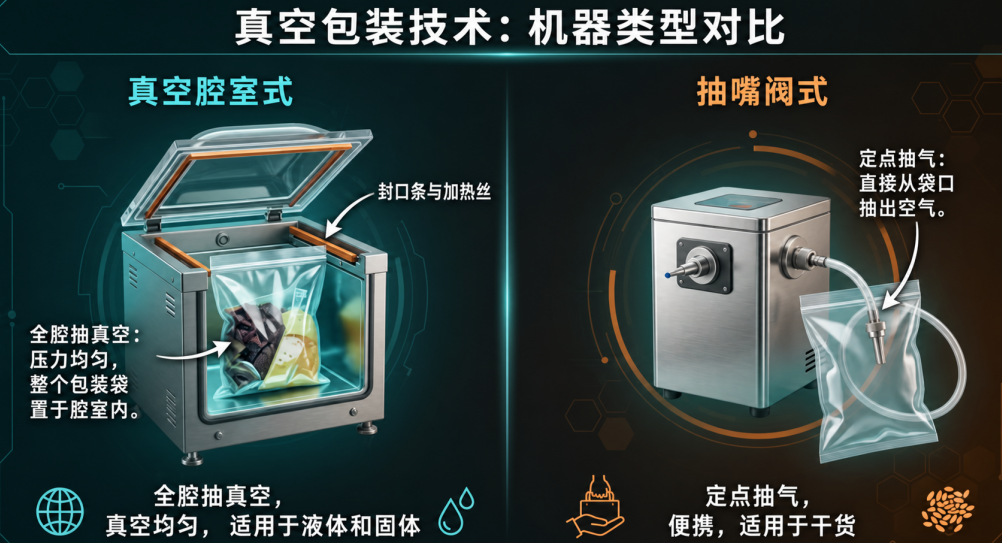
In addition to the distinction between in-chamber and external vacuum systems, external vacuum equipment can be further categorized based on how it connects to the packaging bags: integrated tube (retractable nozzle) structures and valve-type structures.
Integrated Intubation Assembly
A rigid or semi-rigid vacuum tube extends from the front of the machine. The operator manually inserts the tube into the open bag opening and secures it, then starts the cycle; the machine first seals the bag by wrapping around the tube, and then retracts the tube. This is the most common design used in household and semi-industrial models.
Valve-type design
The device does not come with a tube that can be inserted into the bag; instead, it features a recessed vacuum port on the body. When used with specialized vacuum bags equipped with one-way valves, simply align the valve on the bag with the port and press firmly to seal. The vacuum pump extracts air through the one-way valve, and the valve closes automatically when the bag is removed. If the bag features a combination of a zipper and a one-way valve, heat sealing is not required.
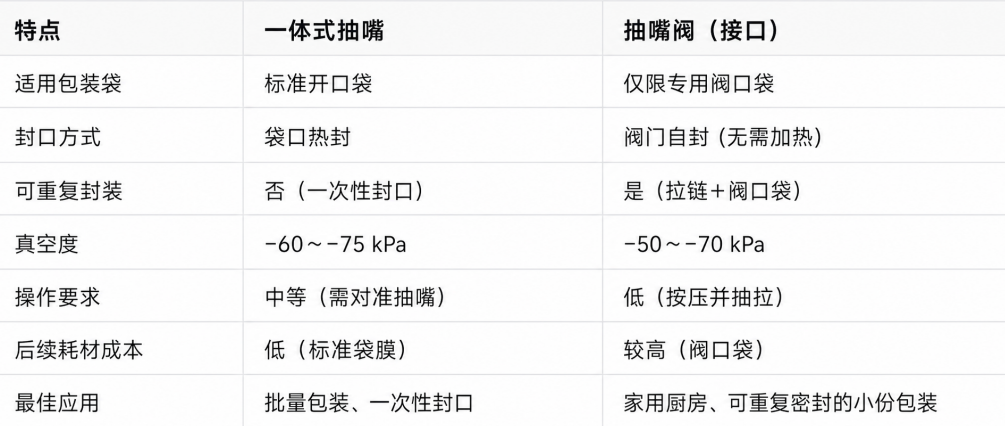
YGPACK recommends: For commercial and food production applications, chamber-type machines outperform both types of nozzle-based models in terms of vacuum level, packaging material costs, and production capacity. Valve-type machines are better suited for home use or for retail display packaging that features resealability as a selling point.