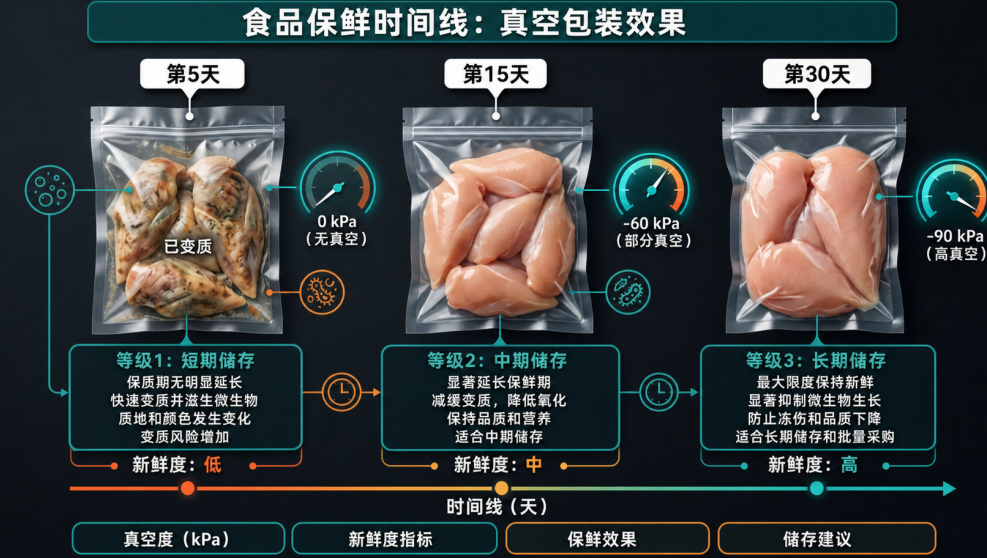
Vacuum level is the single most important factor in determining how long packaged products will stay fresh. Vacuum level is measured in kilopascals (kPa) of negative pressure; the lower the value, the more air (oxygen) has been removed.
Why Is Oxygen the Enemy of Freshness? Aerobic bacteria and mold need oxygen to multiply. Oxidation reactions break down fats, vitamins, and pigments. Even a small amount of residual oxygen can significantly accelerate food spoilage.
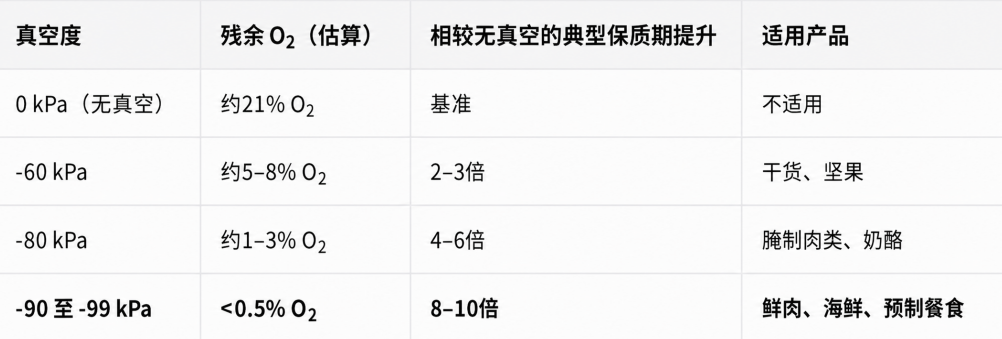
Reference Data on Vacuum Level and Shelf Life:
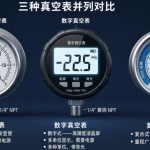
Vacuum Level Pitfalls: Many budget-friendly units are rated at “–80 kPa,” but after hundreds of cycles, they can no longer maintain this vacuum level due to wear on the vacuum pump or air leaks in the seals. Be sure to request the vacuum pump specification sheet to verify the ultimate vacuum (the maximum vacuum achievable when the equipment is unloaded); if the equipment claims an operating vacuum of –90 kPa, its ultimate vacuum should be at least –98 kPa.
YGPACK Vacuum Pump Specifications: All YGPACK chamber-type vacuum machines are equipped with oil-sealed rotary vane vacuum pumps, capable of achieving a ultimate vacuum of –99.9 kPa and maintaining a stable operating vacuum of ≥–95 kPa throughout the pump’s rated service life.
How does an oil-sealed rotary vane vacuum pump work?
How can you tell if a gasket is leaking?
What is the difference between ultimate vacuum and working vacuum?