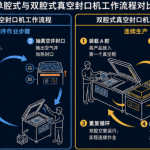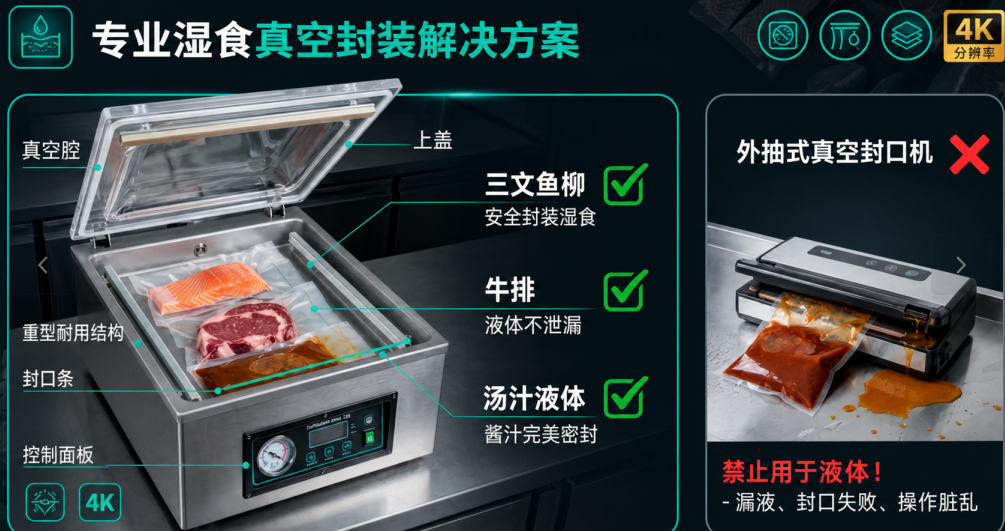
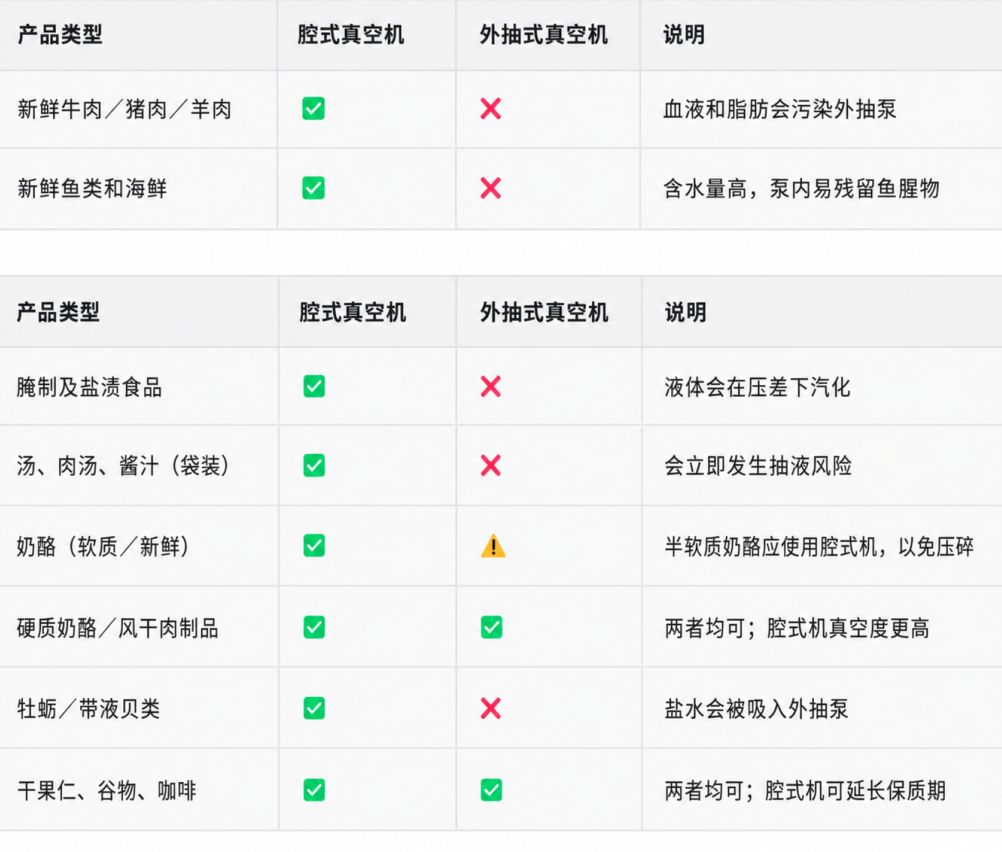
Brief Conclusion: Chamber-type vacuum packaging machines—there is no other option. If your product contains free liquid, brine, marinade, fat, or any moisture that will flow under a pressure differential, an external-nozzle vacuum packaging machine will definitely not function properly. Here’s why: Why external (nozzle-type) sealers cannot handle wet products: An external (nozzle-type) sealer creates a pressure differential between the inside of the bag (near vacuum) and the outside (atmospheric pressure, approximately 101 kPa). Take a bag of marinated chicken legs as an example: the liquid inside the bag will experience a sudden drop in pressure. In a near-vacuum environment at room temperature, the liquid begins to vaporize and form bubbles, which are then drawn into the vacuum pump. This causes the filter to clog and the pump oil to become contaminated, leading to machine failure within a few weeks. Why Chamber-Type Vacuum Packaging Machines Are the Only Solution: In chamber-type equipment, the entire sealed space (including the area outside the packaging bag) simultaneously reaches the same vacuum level. There is no pressure differential on either side of the bag wall. The liquid inside the bag remains stable and does not vaporize, ensuring that the vacuum pump always extracts clean, dry air. Product Compatibility Guide
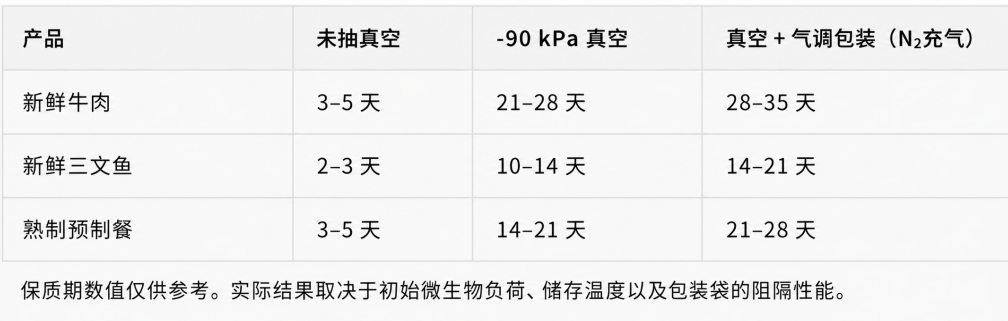
Recommended YGPACK Machine Configurations for Wet Food Processing: Machine Type: Single-chamber or double-chamber vacuum packaging machine Target Vacuum Level: ≥ -90 kPa (requires a rotary vane oil pump) Seal Width: Minimum 10 mm at the sealing position in contact with liquid Optional Features: Gas-flushing function (nitrogen/carbon dioxide), suitable for high-end modified-atmosphere packaging of meat Packaging bag specifications: PA/PE co-extruded film; minimum thickness of 70 micrometers for fresh meat; 90 micrometers for seafood with bones or shells Reference shelf life under refrigerated conditions (2–4°C):